 Save
Save There's something about the smell of butter hitting a hot pan that signals the beginning of comfort, and that's exactly what drew me into making this potato soup on a Tuesday afternoon when the house felt too quiet. I wasn't chasing nostalgia or trying to recreate someone else's recipe—I simply had potatoes, cream, and the kind of day that needed warming from the inside out. What started as a simple way to use up vegetables became a ritual I'd repeat whenever the weather turned cold or my mood needed lifting.
I made this soup for my neighbor who had just moved in, unsure of what to bring but wanting something that felt genuine rather than store-bought. She stood in her kitchen doorway holding the warm container, and when she came back the next week to return the dish, she told me she'd had it for every dinner that night because she couldn't stop eating it. That's when I realized this wasn't just soup—it was something that made people feel seen.
Ingredients
- Russet potatoes (900 g / 2 lbs), peeled and diced: These break down beautifully into a creamy base without turning to mush, and their starch naturally thickens the soup so you don't need flour or cornstarch.
- Yellow onion (1 medium), chopped: The foundation of flavor here—cook it long enough to soften and it becomes almost sweet, building the backbone everything else rests on.
- Celery stalks (2), chopped: Often overlooked, but this is what gives the soup depth and keeps it from tasting one-dimensional.
- Garlic (2 cloves), minced: Add it after the onions have softened so it doesn't burn and turn bitter on you.
- Carrot (1 medium), peeled and chopped: A little sweetness that rounds out the earthiness of potatoes and adds color without trying too hard.
- Vegetable or chicken broth (1 L / 4 cups): Use good broth if you can—it's one of those ingredients where quality actually matters and changes everything.
- Whole milk (240 ml / 1 cup): This smooths out the flavor without making the soup heavy or overly rich.
- Heavy cream (120 ml / ½ cup): The final touch that makes it feel special, but don't overdo it or you'll mask the potato flavor.
- Unsalted butter (2 tbsp): Your starting point for building flavor—let it foam slightly before adding vegetables.
- Salt and freshly ground black pepper (1 tsp salt, ½ tsp pepper): Taste constantly as you go because seasoning at the end never quite works the same way.
- Ground nutmeg (¼ tsp, optional): Just a whisper—this is the secret that makes people ask what's in it.
Tired of Takeout? 🥡
Get 10 meals you can make faster than delivery arrives. Seriously.
One email. No spam. Unsubscribe anytime.
Instructions
- Sauté your base:
- Melt butter in a large pot over medium heat until it foams slightly, then add onions, celery, carrot, and garlic. Let them cook for 5 to 7 minutes, stirring occasionally, until they soften and the kitchen smells like something good is happening. You'll know they're ready when the onions turn translucent and the garlic becomes fragrant.
- Build the soup:
- Add your diced potatoes, broth, salt, pepper, and nutmeg if you're using it. Bring everything to a boil—you'll see the surface start to bubble vigorously—then lower the heat and let it simmer uncovered for about 20 minutes until the potatoes are so tender a fork slides through them easily.
- Blend to smoothness:
- Take the pot off the heat and use an immersion blender to puree the soup into a velvety consistency, or leave it slightly chunky if that's more your style. Work the blender through the liquid in sections, and listen for the sound to change from sputtering to smooth.
- Finish with cream:
- Stir in the milk and heavy cream, then return the pot to low heat and warm it through gently, stirring every minute or so. This is the important part—never let it boil after the dairy goes in or the cream can curdle and separate.
- Taste and serve:
- Give it a final taste and adjust salt and pepper if needed, remembering that seasoning shifts slightly as soup cools. Ladle it into bowls and add whatever garnishes call to you.
 Save
Save What made me keep coming back to this recipe was realizing it became the thing people asked for, the one they'd text about asking if I was making it soon. A bowl of soup shouldn't carry that weight, but somehow this one did, maybe because it tasted like someone was taking care of you.
Variations to Make It Your Own
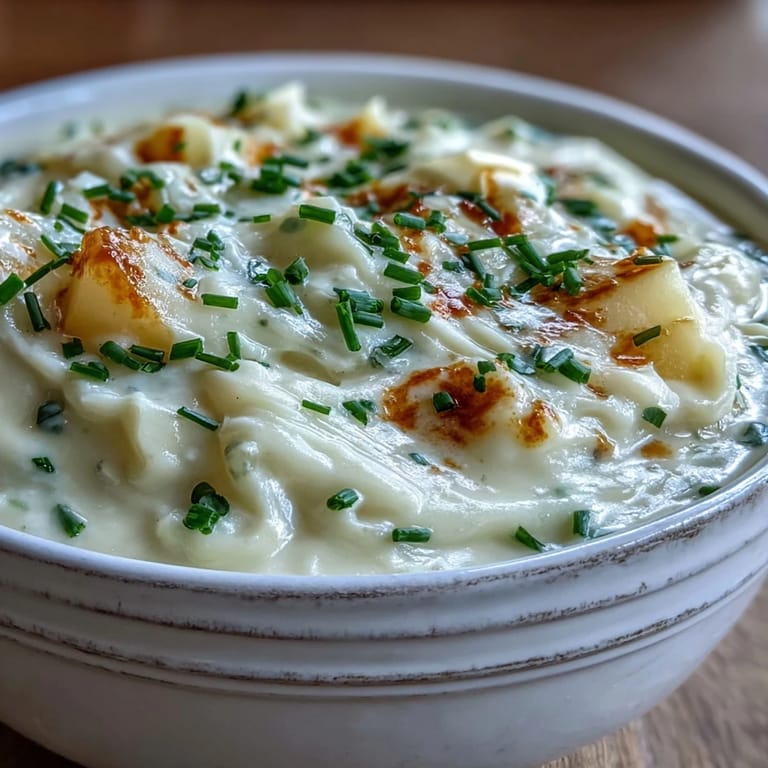
This soup has a gentle, welcoming flavor that accepts additions without complaint. I've stirred in crispy bacon because it adds a salty contrast, topped it with sharp cheddar because cheese belongs in potato soup, and scattered fresh chives because green makes it feel lighter. Some nights I add a pinch of cayenne to wake things up, other times I leave it exactly as written because sometimes simple is the point.
Storage and Make-Ahead Magic
This soup keeps beautifully in the refrigerator for up to four days, and I've found it actually deepens in flavor after sitting overnight. When you reheat it, use low heat and add a splash of milk if it's thickened up too much—the cream base means it gets richer as it sits.
Making It Work for Different Diets
I've made this for people with dairy restrictions by swapping in oat milk and coconut cream, and the result was creamy and satisfying in a completely different way. The same technique works whether you're cooking for vegetarians (use vegetable broth) or anyone avoiding gluten (just verify your broth label). What matters is that the foundation—the sautéed vegetables, the potato base—stays solid, and everything else is just adaptation.
- For vegan versions, use plant-based butter, non-dairy milk, and cashew cream whisked with a little water for that luxurious texture.
- Leftover soup reheats better on the stovetop than the microwave, which somehow keeps the creaminess intact better.
- If your soup breaks or becomes grainy despite your best efforts, strain it through a fine mesh and start fresh—don't throw it away.
 Save
Save This soup asks for nothing but potatoes, time, and the willingness to let simple things be delicious. It's the kind of recipe that becomes part of your kitchen life without you planning for it to happen.
Recipe FAQs
- → What type of potatoes work best for creamy potato soup?
Russet potatoes are ideal for cream soup due to their high starch content and fluffy texture. They break down beautifully during cooking, creating natural thickness without needing additional thickeners. Yukon Gold potatoes also work well if you prefer a slightly creamier, less grainy consistency.
- → Can I make this soup ahead of time?
Absolutely. This soup actually develops more flavor when made ahead. Cool completely, then refrigerate in an airtight container for up to 3 days. Reheat gently over low heat, stirring occasionally. You may need to add a splash of milk or broth when reheating, as the soup tends to thicken in the refrigerator.
- → How do I prevent the dairy from curdling?
The key is tempering your dairy. Warm the milk and cream slightly before adding, and always remove the soup from direct heat before incorporating them. Return to only low heat afterward, never letting it reach a boil. This gentle treatment keeps the proteins stable and your soup perfectly smooth.
- → What can I use instead of an immersion blender?
A standard countertop blender works wonderfully. Puree the soup in batches, filling the blender only halfway to allow for expansion. Remove the center cap from the lid and cover with a kitchen towel to safely release steam. For a chunkier version, simply mash some potatoes against the pot side with a wooden spoon.
- → Is there a way to make this soup vegan?
Certainly. Replace butter with olive oil or vegan butter, swap whole milk for unsweetened oat or soy milk, and use full-fat coconut cream or vegan cream alternative. The result remains satisfyingly creamy, and the vegetable broth base keeps it naturally plant-based while maintaining all the comforting elements.
- → What garnishes complement this soup?
Fresh herbs like chives, parsley, or thyme add bright contrast. Crumbled bacon brings savory depth, while shredded sharp cheddar melts beautifully. For texture, try toasted croutons or crushed crackers. A drizzle of good olive oil or a sprinkle of smoked paprika also elevates the presentation impressively.