 Save
Save There's something almost magical about the moment you pull roasted red peppers from the oven, their skins blistered and charred to a deep mahogany. I discovered this soup on a crisp autumn evening when I had too many peppers from the farmers market and not enough plans for them. The harissa paste sitting in my pantry seemed like the perfect partner, and by the time everything came together in that first silky spoonful, I understood why this became the kind of recipe you make again and again.
I made this soup for my neighbor after she mentioned feeling under the weather, and watching her close her eyes after that first spoonful told me everything. She asked for the recipe that same afternoon, and now whenever I smell roasted garlic, I think of her kitchen window fogging up as she made it herself. It became our winter tradition, something we'd text about when the weather turned cold.
Ingredients
- Red bell peppers (4 large): These are the star, so choose ones that feel heavy and have smooth, unblemished skin; the roasting transforms their natural sweetness into something almost honeyed.
- Garlic (1 head): Roasting mellows garlic's bite completely, turning it into something buttery and almost sweet that slides into the soup without any harshness.
- Yellow onion (1 medium, diced): This is your flavor foundation, softened in oil until it becomes almost invisible but deeply flavorful.
- Carrot (1 medium): A little earthiness and natural sweetness that rounds out the peppers without overwhelming them.
- Potato (1 medium, diced): This does the heavy lifting for creaminess, helping you skip heavy cream and still get that silky texture everyone loves.
- Olive oil (2 tbsp plus extra for drizzling): Use good quality if you can; you'll taste it in every spoonful.
- Tomato paste (1 tbsp): A small amount adds umami depth and helps the peppers taste more like themselves.
- Harissa paste (1½ tsp): This North African red chili paste brings heat and complexity; start conservative and adjust because you can always add more but you can't take it back.
- Vegetable broth (4 cups): The liquid backbone that lets everything mingle and become unified.
- Smoked paprika (1 tsp): Brings a whisper of smoke that reminds you why roasting matters.
- Salt and black pepper: Taste and adjust at the end; this is where the soup finds its voice.
Tired of Takeout? 🥡
Get 10 meals you can make faster than delivery arrives. Seriously.
One email. No spam. Unsubscribe anytime.
Instructions
- Get your oven ready and prep your peppers:
- Preheat to 425°F, then halve your red peppers and scoop out the seeds and white membranes completely. Slice the top off your garlic head to expose the cloves, brush with olive oil, wrap it in foil, and you're ready for the oven.
- Roast until charred and blistered:
- Lay the peppers skin-side up on a parchment-lined baking sheet with your garlic package. Watch them roast for 25 to 30 minutes; you want the skins to blacken and blister, which means all that sweet pepper flavor is concentrating. The kitchen will smell incredible.
- Cool and peel:
- Let everything cool until you can handle it, then the skins will slip off the peppers like they're just ready to leave. Squeeze the roasted garlic cloves out of their papery skins; they should be golden and soft.
- Build your soup base:
- Heat olive oil in a large pot over medium heat and add your diced onion, carrot, and potato. Sauté for about five to seven minutes, stirring occasionally, until they soften and release their aroma.
- Add the flavor layers:
- Stir in tomato paste and harissa, cooking for just one minute so they warm through and start to perfume the oil. This step is brief but important; it wakes up those deeper flavors.
- Bring it together:
- Add your roasted peppers, roasted garlic cloves, smoked paprika, and vegetable broth. Bring everything to a boil, then lower the heat and let it simmer for 15 to 20 minutes until the vegetables are completely tender.
- Blend until silky:
- Use an immersion blender right in the pot or carefully transfer to a blender in batches (never fill it more than halfway when blending hot liquid). Blend until you can't feel any texture, until it's smooth as silk.
- Taste and finish:
- This is your moment to adjust everything—salt, pepper, maybe a touch more harissa if you want more heat. Taste as you go and trust your palate.
- Serve with purpose:
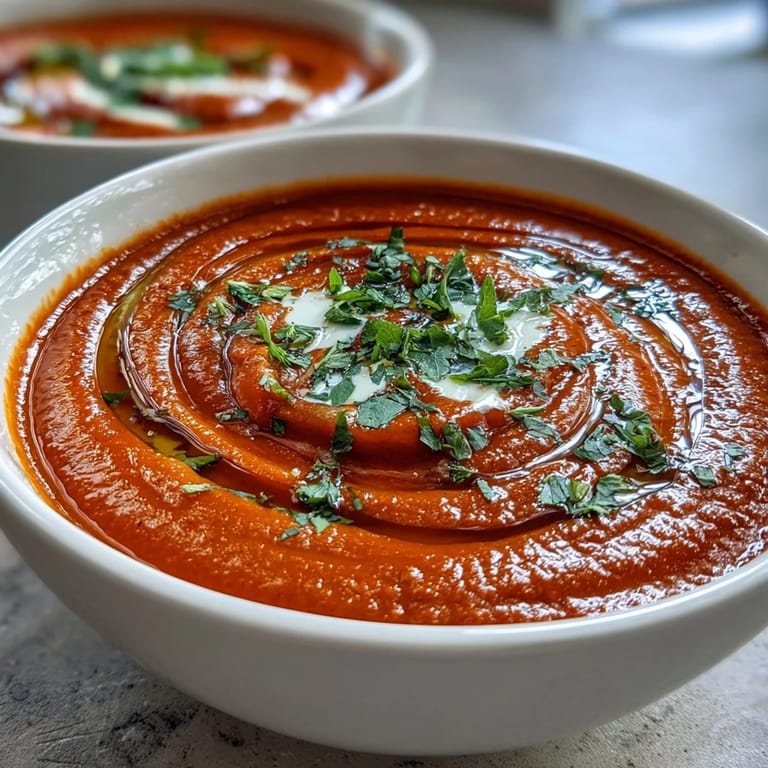
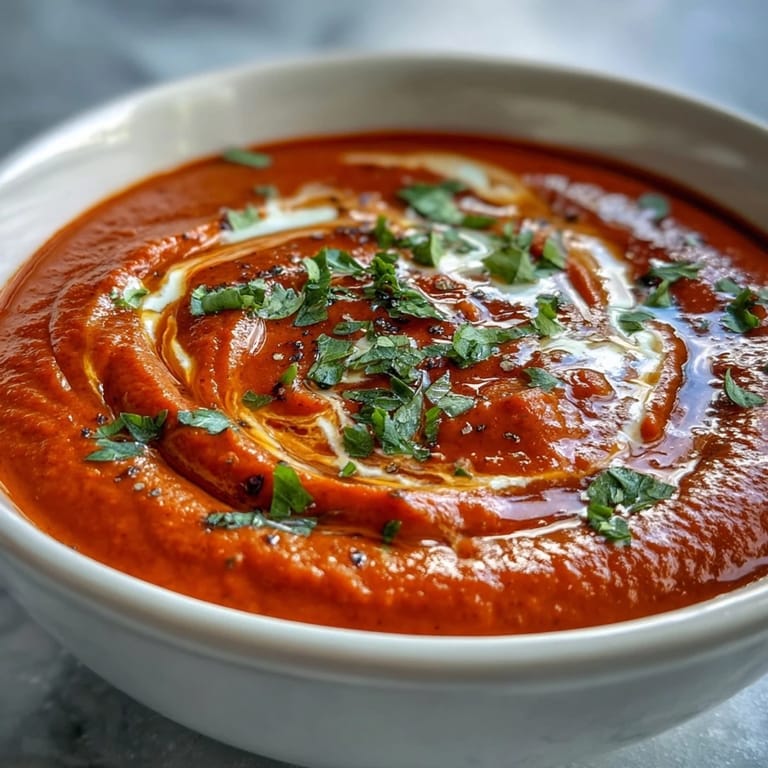
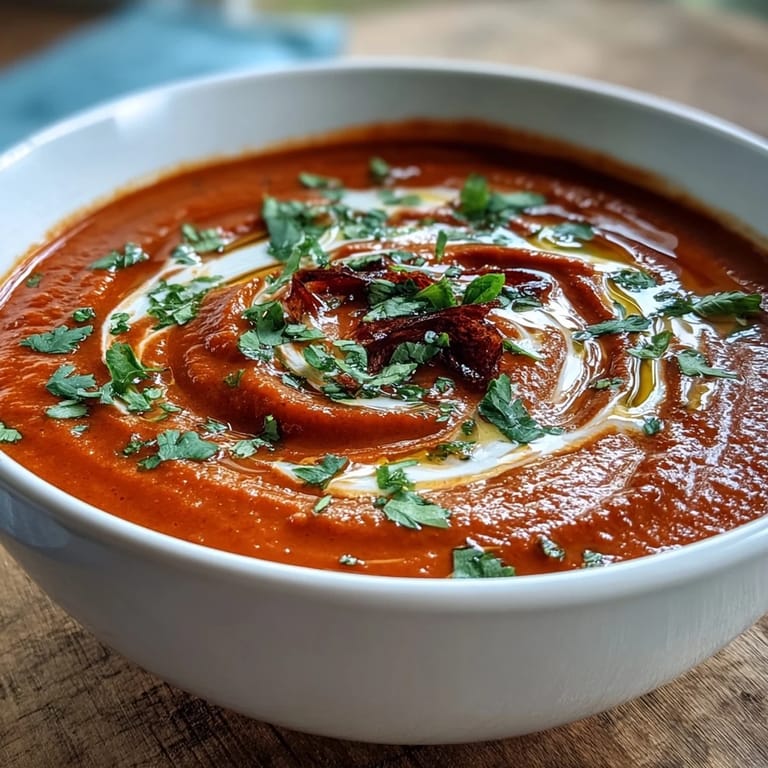
- Ladle into warm bowls, swirl a spoonful of crème fraîche or Greek yogurt on top, scatter fresh herbs over it, and serve with crusty bread for dipping.
 Save
Save I brought this soup to a dinner party once, and someone actually set their spoon down and asked if I was going to start a restaurant. It's one of those moments that reminds you why you cook—not to impress, but to give people something warm and genuine they'll remember.
The Secret of Roasted Garlic
Roasting garlic is one of those kitchen magic tricks that changes how you approach cooking. Raw garlic has teeth, but when you roast it whole, something chemical happens that makes it sweet, almost buttery, almost like a different ingredient entirely. I used to be afraid of garlic for years, thinking it would always bite back, until I learned this method. Now I roast garlic cloves whenever I have the oven on, and I'm never without a little jar of them in my refrigerator for spreading on bread or mashing into soups.
Why Harissa Works Here
Harissa is a North African chili paste that brings a complexity you don't get from simple red pepper flakes. It's warm rather than sharp, with depths that suggest cumin and caraway even when they're not there. The first time I used it, I was cautious, worried I'd make the soup inedible, but a teaspoon and a half turned this soup into something that felt more alive, more interesting, more like something you'd eat at a restaurant that actually cares about what goes into your bowl. Start with less than you think you need—harissa has a way of blooming as the soup rests.
Building Flavor Without Cream
The potato is doing all the heavy lifting here, creating that creamy mouthfeel without any heavy cream or butter. This was born out of necessity one day when I was out of cream and didn't want to skip the recipe, and it turned out the potato method creates an even more refined texture because you're getting creaminess from the vegetable itself rather than just fat. When you blend a potato-based soup, the starches release and create natural body and silkiness. It's one of those cooking lessons that reminds you sometimes constraints lead to better ideas.
- Don't skip the blending step or you'll lose that luxurious texture that makes the soup feel indulgent.
- If your soup is too thick after blending, add broth a quarter cup at a time until you reach the consistency you want.
- Taste before serving because salt levels matter more in pureed soups than chunky ones.
 Save
Save There's a reason this soup became the thing I reach for when I want to feel like I've cooked something real. It sits on the stove filling your kitchen with warmth, and it ends up in a bowl tasting like something you'd order somewhere beautiful.
Recipe FAQs
- → Can I use jarred roasted peppers instead of fresh?
Yes, jarred roasted peppers work well in a pinch. Look for ones packed in water, not oil, and drain them well before adding to the pot. You'll need about two 12-ounce jars to equal four fresh peppers.
- → How spicy is this soup?
With one tablespoon of harissa, the soup offers mild to medium heat that's warming without being overwhelming. Adjust the amount based on your preference—start with one teaspoon for a gentler kick or increase to two tablespoons for more spice.
- → Can I freeze this soup?
Absolutely. This soup freezes beautifully for up to three months. Let it cool completely before transferring to airtight containers. Thaw overnight in the refrigerator and reheat gently on the stovetit, adding a splash of broth if needed.
- → What can I substitute for harissa?
If you don't have harissa, try equal parts tomato paste and your favorite hot sauce, or use a teaspoon of smoked paprika plus a pinch of cayenne. Sriracha works too, though it will alter the flavor profile slightly.
- → Why add potato to the soup?
Potato acts as a natural thickener, creating that silky, luxurious texture without needing heavy cream. It also helps balance the acidity of the peppers while adding subtle sweetness. One medium potato is plenty for four servings.
- → How do I get the smoothest texture?
Use a high-speed blender and puree in batches, filling it only halfway. For extra silkiness, strain the soup through a fine-mesh sieve after blending. An immersion blender works well too, though the texture may be slightly more rustic.