 Save
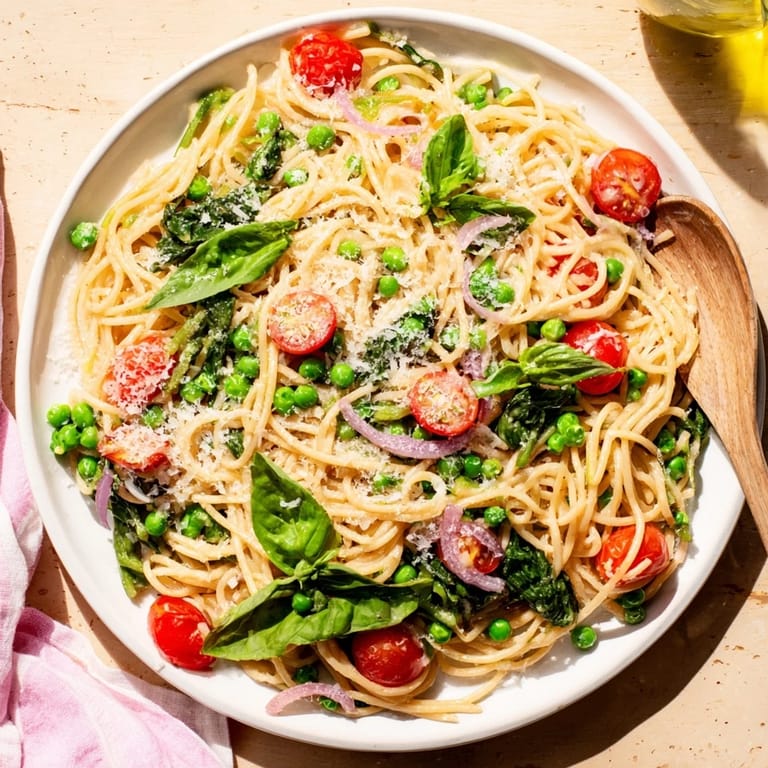
Save My tiny kitchen window was open one April afternoon when I realized I had forgotten to plan dinner. The breeze smelled like wet grass and something green, and I started pulling things from the fridge: a bag of peas from the freezer, spinach that needed using, tomatoes still on the vine. I dumped everything into one pot with dried pasta and broth, and twenty minutes later, I had this bright, tangy spaghetti that tasted like spring itself. No separate pans, no fuss, just color and flavor happening all at once.
I made this for a friend who swore she didnt like one pot pastas because they always turned out mushy. She stood in my kitchen, skeptical, watching the spaghetti soften in the simmering broth while the tomatoes started to burst. When I served it with a snowstorm of Parmesan and torn basil, she went quiet for three bites, then asked for the method. That moment proved to me that technique matters more than tradition.
Ingredients
- Dried spaghetti: The pasta absorbs the broth as it cooks, so it becomes flavorful all the way through instead of just coated in sauce.
- Frozen or fresh peas: Frozen peas are perfectly sweet and save you from shelling, but fresh ones add a little snap if youre feeling fancy.
- Baby spinach: It wilts down to almost nothing, adding color and a mild earthiness without taking over the dish.
- Cherry tomatoes: Halved tomatoes break down slightly, releasing juices that turn the broth into something bright and tangy.
- Garlic: Thinly sliced garlic becomes sweet and mellow when sautéed, infusing the oil before everything else goes in.
- Red onion: It softens beautifully and adds a hint of sharpness that balances the sweetness of the peas and tomatoes.
- Vegetable broth: This is the cooking liquid and the sauce base, so use a good quality broth you would actually want to sip.
- Olive oil: A couple tablespoons create the aromatic base and keep everything from sticking as the pasta hydrates.
- Lemon zest: Stirred in at the end, it wakes up all the other flavors and makes the whole dish feel lighter and brighter.
- Parmesan cheese: The salty, nutty finish ties everything together, and it melts slightly into the hot pasta for added richness.
- Fresh basil: Torn basil on top adds a pop of herbal fragrance that smells like summer is just around the corner.
Tired of Takeout? 🥡
Get 10 meals you can make faster than delivery arrives. Seriously.
One email. No spam. Unsubscribe anytime.
Instructions
- Start with the aromatics:
- Heat the olive oil in a large pot over medium heat, then add the garlic and red onion. Let them sizzle gently for 2 to 3 minutes until they smell sweet and the onion turns translucent.
- Add everything at once:
- Toss in the spaghetti, peas, spinach, and cherry tomatoes, then pour in the vegetable broth and bring it to a boil. It looks chaotic at first, but trust the process.
- Season and simmer:
- Stir in the salt, black pepper, and red pepper flakes if using. Keep stirring occasionally so the pasta doesnt clump together as it softens.
- Cook until tender:
- Let everything bubble away uncovered for 10 to 12 minutes, until the spaghetti is al dente and most of the broth has been absorbed. Stir in the lemon zest right before you take it off the heat.
- Serve it up:
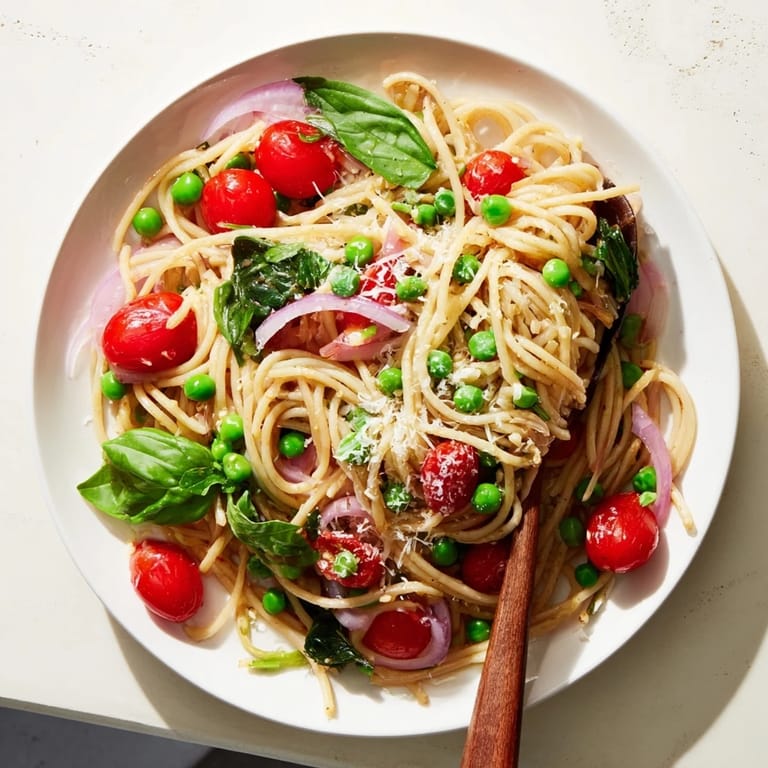
- Divide the pasta among plates and top each portion with grated Parmesan and a handful of torn fresh basil. Serve immediately while its still steaming.
 Save
Save One evening, I served this to my neighbor who had just moved in and didnt have her kitchen set up yet. She ate two bowls standing at my counter, and we talked about how food tastes better when you dont have to do a sink full of dishes afterward. It became our unofficial welcome dinner tradition, simple enough to make on a whim but special enough to feel like care.
Making It Your Own
This recipe is endlessly adaptable depending on what vegetables are in season or what you have lingering in the fridge. Asparagus tips, snap peas, or even thinly sliced zucchini work beautifully in place of or alongside the peas and spinach. If you want more protein, stir in a drained can of chickpeas or white beans during the last few minutes of cooking. You can also swap the spaghetti for linguine, fettuccine, or even a short pasta like penne, just adjust the cooking time according to the package instructions.
Storage and Reheating
Leftovers keep well in an airtight container in the fridge for up to three days, though the pasta will continue to absorb liquid as it sits. When reheating, add a splash of vegetable broth or water to loosen it up, and warm it gently in a pan over low heat or in the microwave in short intervals. The flavors actually deepen overnight, and the lemon zest becomes even more pronounced. I sometimes add a drizzle of olive oil and a handful of fresh greens when reheating to brighten it back up.
Serving Suggestions
This spaghetti shines on its own, but it also pairs wonderfully with a simple side salad dressed in lemon vinaigrette or a chunk of crusty bread for soaking up any remaining broth. If youre serving it for guests, a crisp white wine like Sauvignon Blanc or Pinot Grigio complements the bright, vegetal flavors beautifully. For a more casual weeknight meal, sparkling water with a twist of lemon feels just right.
- Top with toasted pine nuts or slivered almonds for extra crunch and richness.
- Finish with a drizzle of good quality olive oil and a few extra grinds of black pepper.
- Serve with lemon wedges on the side so everyone can add an extra squeeze if they like.
 Save
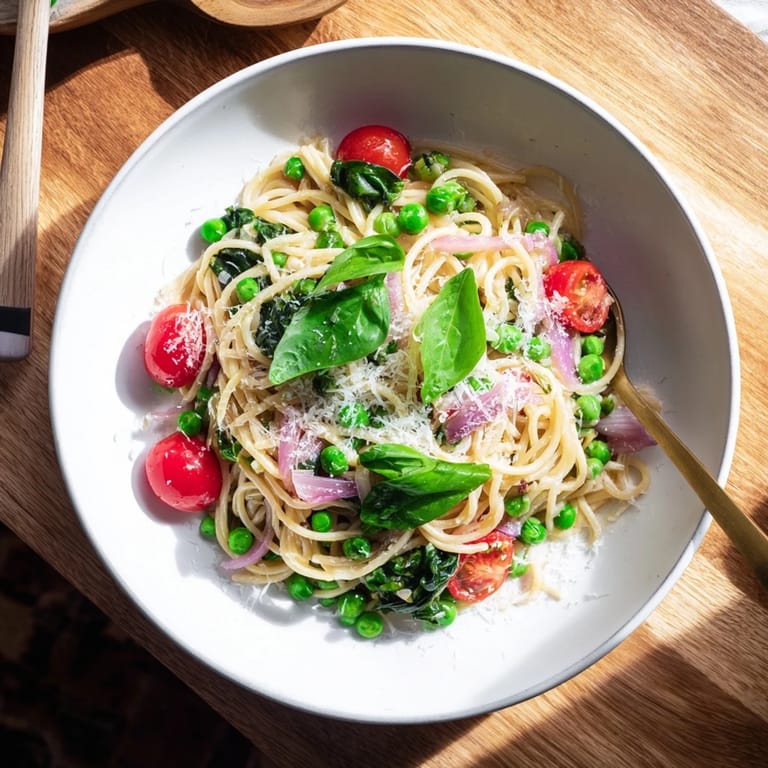
Save This dish taught me that dinner doesnt have to be complicated to feel complete. Sometimes the best meals are the ones that come together in a single pot, leaving you with more time to sit down and actually enjoy them.
Recipe FAQs
- → Can I use fresh vegetables instead of frozen peas?
Yes, fresh peas work wonderfully in this dish. Use the same quantity and add them at the same time as the frozen peas. Fresh vegetables may cook slightly faster, so check for doneness a minute or two earlier.
- → How do I prevent the pasta from sticking?
Stir occasionally throughout cooking, especially in the first few minutes after adding the broth. The occasional stirring helps distribute heat evenly and prevents the pasta from clumping together.
- → What can I add for extra protein?
A drained can of chickpeas adds great protein and texture. Add them in step 2 along with the other vegetables. Alternatively, you can use white beans or add crumbled tofu for a vegan option.
- → Is this dish suitable for gluten-free diets?
Yes, simply swap the regular spaghetti for gluten-free pasta. Use the same cooking time and method. Always verify that your vegetable broth is certified gluten-free if you have celiac disease.
- → Can I make this dairy-free?
Absolutely. Replace the Parmesan with nutritional yeast or vegan cheese for a dairy-free version. The lemon zest and fresh basil still provide excellent flavor without the cheese.
- → What pasta alternatives work best for this dish?
Whole-wheat spaghetti adds fiber and a nuttier flavor. Alternatively, try legume-based pastas like lentil or chickpea spaghetti for added protein. All varieties cook similarly in this one-pot method.